Deadlock Tier List: Best Heroes For The July 2026 Patch
Every Deadlock hero ranked for the July 9 patch using current match data, plus the best picks for beginners and an explanation of the filters that change tier lists.
A tier list is useful only when its patch, rank filter, mode, and sample window are visible beside the rankings.
Updated July 20, 2026: The strongest Deadlock heroes in the current high-rank data are McGinnis, Ivy, Seven, and Kelvin. Graves and Victor form the next leading pair, while Lash, Dynamo, Haze, Billy, Vyper, and Warden remain clearly above the middle of the July 9 patch snapshot.
This Deadlock tier list ranks all 38 heroes using Deadlock API data for ranked Standard matches at Phantom 1 and above since the July 9, 2026 minor update. The source updates as new matches arrive and displays rounded win rates, so the tiers are more useful than pretending a one-place difference is exact.
Deadlock Tier List For July 2026
| Tier | Heroes | Current read |
|---|---|---|
| S | McGinnis, Ivy, Seven, Kelvin | The top high-rank win-rate group, each shown around 54% in the current rounded data. |
| A | Graves, Victor, Lash, Dynamo, Haze, Billy, Vyper, Warden | Strong positive performers around 52% to 53%, with different pick and ban profiles. |
| B | Paige, Calico, Drifter, Yamato, Vindicta, Wraith, Lady Geist, Abrams, Mo & Krill, The Doorman, Mirage | Healthy or near-even results around 50% to 51%; comfort and team fit can outweigh small gaps. |
| C | Holliday, Apollo, Celeste, Silver | Just below the middle around 49%, with room for specialists to outperform the average. |
| D | Shiv, Paradox, Bebop, Rem, Viscous | Current high-rank results sit around 47% to 48%; execution and matchup demands are significant. |
| F | Pocket, Venator, Mina, Infernus, Sinclair, Grey Talon | The lowest current group at roughly 46%; this describes public results, not an inability to win. |
Data date: Checked July 20, 2026. Patch window: Minor Update 07-09-2026. Mode: Standard. Queue: Ranked. Rank filter: Phantom 1 and above. Deadlock API states that the statistics come from tracked ranked matches and update in real time.
How This Deadlock Hero Tier List Works
The list starts with win rate because that is the clearest public result metric, then uses tiers to avoid false precision. The source currently rounds each hero’s win rate to a whole number. Four heroes showing 54% are not necessarily tied to the decimal, and a hero at 51% may be much closer to the 52% group than the table suggests.
Pick rate, ban rate, and presence add context. Haze had far more pick presence than several heroes around her position when checked. The Doorman carried a much larger ban rate than a simple 50% win-rate row might imply. A rarely selected specialist and a common first choice can arrive at the same win rate through very different player populations.
This is not Valve’s official ranking. Valve publishes balance changes, not a canonical tier list. The current official patch context is the Deadlock changelog thread containing the July 9 minor update.
S Tier: McGinnis, Ivy, Seven, And Kelvin
McGinnis leads the filtered table with a rounded 54% win rate. Her appeal is not one narrow trick: sustained weapon pressure, structures, healing, and objective control all give a team useful ways to convert an advantage. She is also easier to turn into consistent map pressure than many mechanically demanding carries.
Ivy combines strong results with a much broader pick profile. Mobility, ally transport, control, and teamfight utility make her valuable even when she is not the main damage source. That kind of utility tends to survive imperfect drafts because it creates more than one route to a good fight.
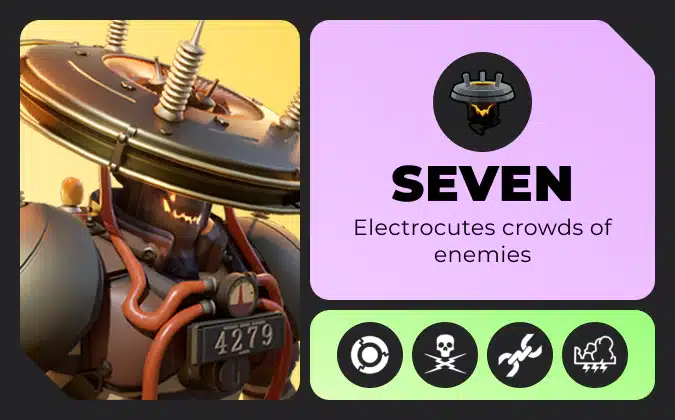
Seven remains the most stable headline across multiple tracker snapshots. Large area pressure is naturally valuable around objectives and narrow approaches. Seven was already the cleanest June answer, and he remains in the top group after the July 9 patch window.
Kelvin rounds out S tier in the high-rank filter. His sustain, slowing, and space control help teams decide when an objective fight continues and when it stops. A lower pick rate than Ivy or Seven does not erase the result; it is a reason to keep sample composition in mind.
A Tier: The Strongest Alternatives
Graves and Victor are the clearest risers compared with the June snapshot. Deadlock API places both around 53% for Phantom 1 and above, while Tracklock’s July 9 all-rank presentation put Graves and Victor at the top of its visible hero table. The agreement matters more than the exact order: both are performing strongly across different tracker views.
Lash, Dynamo, Haze, Billy, Vyper, and Warden form the rest of A tier. This is not one shared playstyle. Lash and Dynamo create teamfights; Haze and Vyper can turn weapon pressure into kills; Billy and Warden force close contact; and each hero asks for a different level of coordination.
Haze deserves an extra warning about popularity. Her very high pick presence means the data includes many levels of experience and many drafts. A 52% result at broad presence is impressive, but it does not mean every team needs a Haze or that a first-time Haze will outperform a practiced B-tier hero.
B Tier: Balanced, Useful, And Often Draft-Dependent
B tier contains the widest practical hero pool: Paige, Calico, Drifter, Yamato, Vindicta, Wraith, Lady Geist, Abrams, Mo & Krill, The Doorman, and Mirage. These heroes sit close enough to the center that matchup knowledge, item choices, and player experience can matter more than the public average.
The Doorman is a good example of why win rate alone is incomplete. His rounded result is near 50%, but his ban rate in the filtered data was much higher than most neighbors. Opponents may be respecting map control, specialist play, or the difficulty of preparing for his kit even though the average win result looks ordinary.
Drifter is another caution. His current position is still positive, but the source showed a notable decline from the previous comparison period. That makes him a volatile B-tier pick rather than a hero whose older reputation should be copied forward without checking the current patch.
C, D, And F Tiers Do Not Mean Unplayable
Holliday, Apollo, Celeste, and Silver sit just below the midpoint in C tier. A rounded 49% is not a disaster. It is the difference between winning 49 and 50 games in a hundred before accounting for player experience, teammates, opponents, and draft context.
D tier contains Shiv, Paradox, Bebop, Rem, and Viscous. Several of these heroes ask the player or team to convert unusual utility into a result. Paradox can create a decisive pick, and Viscous can rescue a fight, but public win rate punishes every failed setup as surely as it records the successful one.
The F-tier group is Pocket, Venator, Mina, Infernus, Sinclair, and Grey Talon in this specific filter. Their rounded rates sit around 46%. That is meaningful enough to influence a blind recommendation, but it does not cancel specialist performance. High mechanical burden, unusual build demands, composition dependence, and a changing patch can all depress a public average.
Best Deadlock Heroes For Beginners
A beginner tier list should value clarity and repeatability, not only current win rate.
- McGinnis: S-tier results plus a visible objective-control plan make her the strongest first recommendation.
- Seven: Strong area damage and readable teamfight goals. New players can contribute without finding a perfect isolated target every time.
- Warden: Direct catch tools, durability, and A-tier current results make his mistakes easier to understand.
- Kelvin: A strong utility choice for players who naturally watch teammates and objectives.
- Abrams: B-tier overall, but still useful for learning close-range engagement, stamina, melee timing, and front-line discipline.
Do not abandon a practiced character solely because the hero moved down one tier. Learning one hero deeply usually produces more wins than rotating through the top four without understanding farming patterns, item timings, or matchups.
Why Other Deadlock Tier Lists Look Different
Tracklock’s homepage snapshot for the July 9 minor patch showed Graves, Victor, and Seven as its top three when checked. A separate rank-filtered view from Deadlock API placed McGinnis, Ivy, Seven, and Kelvin in the rounded top group. Both can be honest because the sources are not necessarily measuring the same rank population, date cutoff, or sampling pipeline.
Before trusting any Deadlock hero tier list, check four labels:
- Patch: Data from before July 9 can describe a different balance state.
- Rank: Heroes that punish basic mistakes may dominate lower ranks and lose relative value against coordinated players.
- Mode: Street Brawl and Standard are different games for statistical purposes.
- Time window: A short window reacts quickly but has less data; a long window can blur multiple balance states.
How To Use A Tier List In Your Draft
Use the tiers as a tiebreaker between heroes you can already play, not as an instruction to ignore the team’s jobs. A lineup still needs ways to start a fight, survive pressure, control space, damage structures, and finish targets. Six individually strong picks can produce a team that cannot enter an objective safely.
Then adjust for the opponents. A hero with an ordinary global win rate may be excellent into the enemy’s movement, range, or damage profile. Item counters also matter. The Deadlock items guide explains defensive purchases, active items, and why a build should respond to the match instead of following one row from left to right.
Deadlock Tier List FAQ
Who is the best hero in Deadlock right now?
McGinnis is first in the current Deadlock API Phantom 1+ ordered table, while Ivy, Seven, and Kelvin share the rounded 54% top group. Tracklock’s broader July 9 snapshot instead highlights Graves, Victor, and Seven. The best answer depends on the rank and source filter.
How often will this tier list update?
The source data updates continuously, but this editorial ranking is dated July 20, 2026. We will revise the tiers after meaningful balance patches or when the current rankings move enough to change the recommendations.
Is win rate enough to rank a hero?
No. Win rate is the starting result, while pick rate, ban rate, rank, player experience, sample size, and team composition explain some of the result. Public data also represents tracked matches rather than a complete Valve balance dataset.
Should I stop playing a low-tier hero?
Not if you are winning, learning, or filling a useful job. A tier list describes population results. It does not know your experience, build quality, teammates, or matchup. Use the table to set expectations and investigate weaknesses, not to replace practice.
Source note: Rankings were checked on July 20, 2026 against Deadlock API’s ranked Standard filter for Phantom 1 and above since the July 9 minor update. Tracklock was used as a comparison snapshot. Neither source is affiliated with Valve, and Valve does not publish an official hero tier list.
Audit the snapshot: The Deadlock API guide maps hero-stat, counter, synergy, and ability-order endpoints and the filters needed to reproduce a ranking.
More Deadlock guides
Move from the fundamentals into heroes, items, builds, and current match data.